
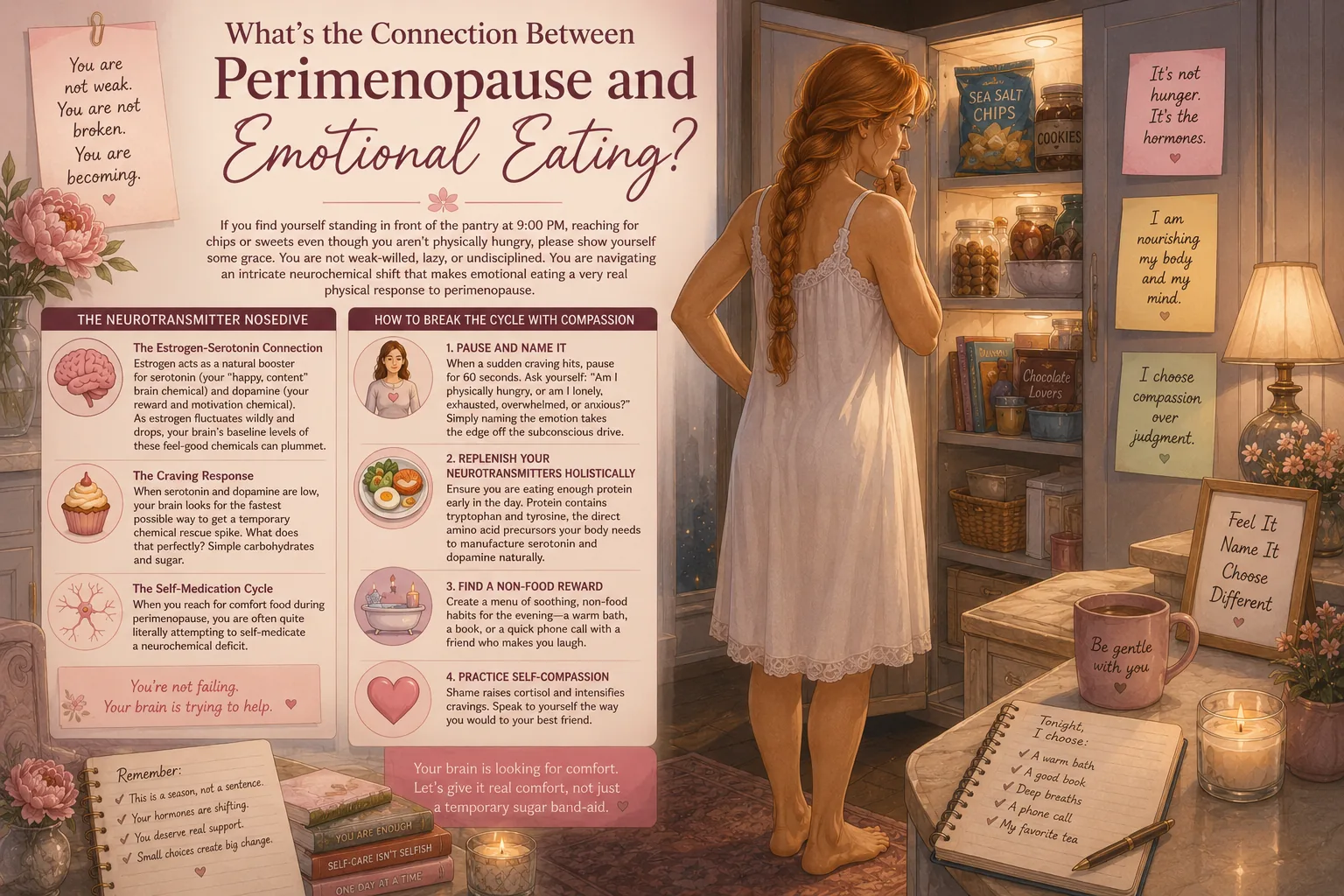
If you find yourself standing in front of the pantry at 9:00 PM, reaching for chips or sweets even though you are not physically hungry, please show yourself some grace. You are not weak-willed, lazy, or undisciplined. You are navigating an intricate neurochemical shift that makes emotional eating a very real physical response to perimenopause.
The neurotransmitter nosedive
Your changing ovarian hormones do not just regulate your reproductive system; they cross the blood-brain barrier and heavily influence your brain chemistry. This is the same brain-hormone connection I explored in the brain fog article, and it drives your cravings just as much as your focus.
- The estrogen-serotonin connection: Estrogen acts as a natural booster for serotonin, your "happy, content" brain chemical, and dopamine, your reward and motivation chemical. As estrogen fluctuates wildly and drops through perimenopause, your brain's baseline levels of these feel-good chemicals can plummet.
- The craving response: When serotonin and dopamine are low, your brain looks for the fastest possible way to get a temporary chemical rescue spike. What does that perfectly? Simple carbohydrates and sugar.
When you reach for comfort food during perimenopause, you are often quite literally attempting to self-medicate a neurochemical deficit. Read that again and let it dismantle the shame you have been carrying: the 9 PM cookie was never a moral failure. It was your brain, low on its own feel-good chemistry, reaching for the fastest known source of relief.
How to break the cycle with compassion
Instead of beating yourself up with shame, which only raises cortisol and worsens the problem, as you saw in the stress article, try these steps:
- Pause and name it: When a sudden craving hits, pause for 60 seconds. Ask yourself, "Am I physically hungry, or am I lonely, exhausted, overwhelmed, or anxious?" Simply naming the emotion takes the edge off the subconscious drive. You are moving the moment out of automatic and into awareness, and awareness is where choice lives.
- Replete your neurotransmitters holistically: Ensure you are eating enough protein early in the day. Protein contains tryptophan and tyrosine, the direct amino acid precursors your body needs to manufacture serotonin and dopamine naturally. This is one more reason the protein-anchored breakfast from the protein article quietly changes your whole evening: you are giving your brain the raw materials to make its own comfort, hours before the craving would have hit.
- Find a non-food reward: Create a menu of soothing, non-food habits for the evening, a warm bath, a book, or a quick phone call with a friend who makes you laugh. The goal is to give your reward system a real deposit instead of the sugar counterfeit it keeps asking for.
For women of faith, I will add a fourth that has carried me and so many of my clients through the hardest evenings: prayer. A few honest minutes of casting your cares is a genuine reset for a frazzled nervous system, not a platitude.
When the craving is telling you something deeper
Sometimes relentless cravings and low mood are not only the ordinary neurochemical dip of perimenopause. They can signal deficiencies, a struggling thyroid, blood sugar chaos, or depression that deserves real care, not another lecture about willpower. This is why we look instead of guess. Comprehensive lab testing read for optimal shows us what your brain and body are actually short on, and working practitioner-led through BloomHer, alongside your primary care doctor and our network provider, we build the repair into your plan: protein timing, blood sugar stability, sleep, stress, and your method, ShapeUp as the foundation, Fire inside Radiance, Butter inside Full Bloom, with your foods, weight, moods, and sleep cycles tracked in the BloomHer membership app so the emotional patterns become visible instead of mysterious. And if what surfaces is bigger than nutrition, we help you find the right support, because you deserve care, not shame.
Your brain is looking for comfort. Let us give it real comfort, not just a temporary sugar band-aid. You are not fighting a lack of willpower. You are tending a chemistry that changed, and tending is something a woman as strong as you already knows how to do.